

Blessings to All:
By: Richard Pickard
Our sorrow is real. So is our hope in Jesus.
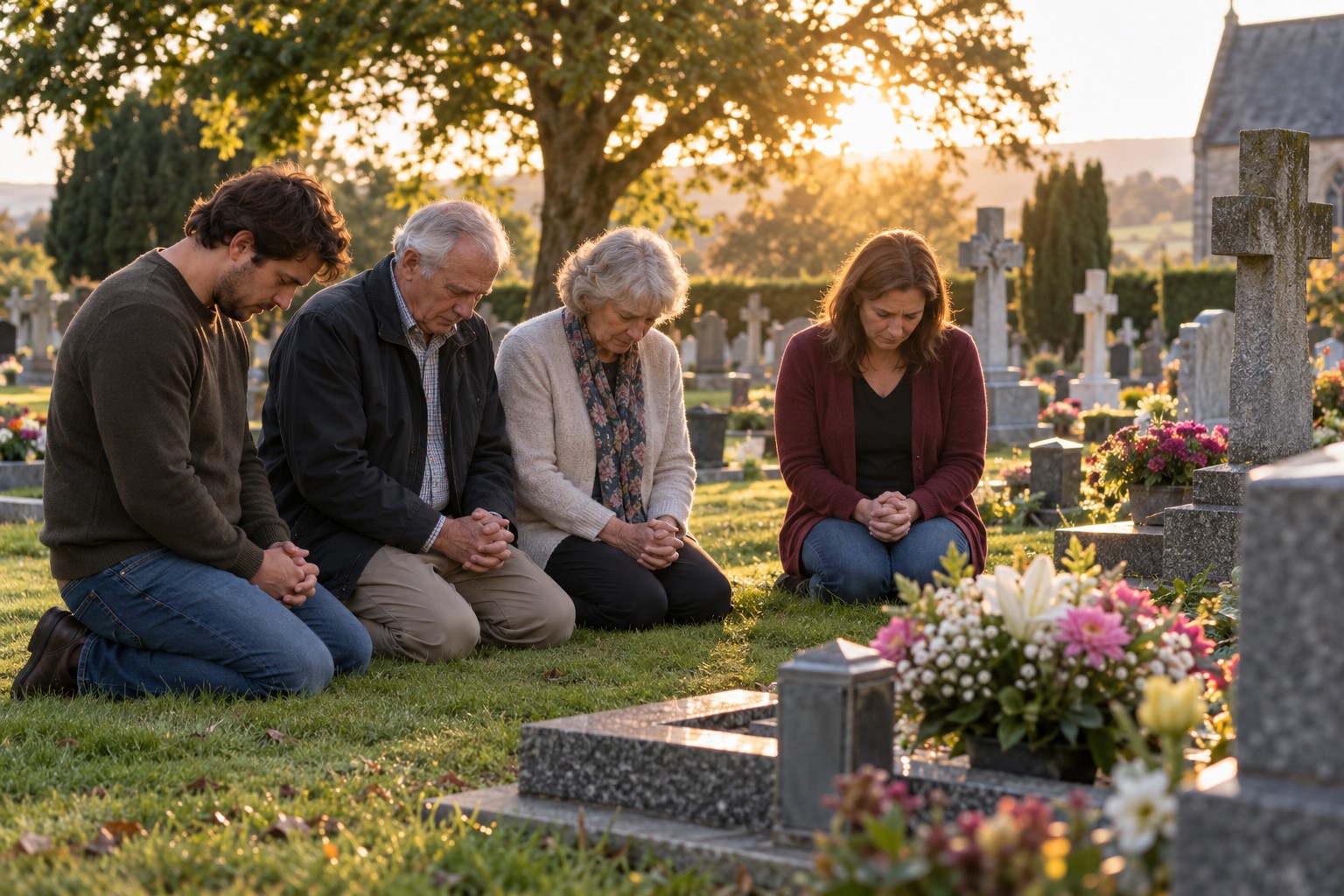
As we grow older, we think about those in our lives who have passed away—our parents, other family members, and close friends. I believe it is important to remember our loved ones. Each holds a place in our hearts that no one else can fill. Remembering them in prayer is one way we continue to love them.
We remember their familiar voices, their laughter, and the ordinary moments we wish we could have again. Sometimes those memories bring a smile. Sometimes they bring tears. Often, they bring both.
There may be an empty chair at Thanksgiving dinner. We may catch ourselves wanting to tell someone about our day before remembering that we cannot call them anymore. Even after many years, a photograph or a familiar song can bring their memory close.
November invites us to bring these loved ones before God—with gratitude for their lives, sorrow at their absence, and hope in the mercy of Jesus.
Jesus understands our sorrow.
When Jesus came to the grieving family of His friend Lazarus, He shared their sorrow. Scripture tells us simply, “Jesus wept” (John 11:35). Yet He also told Martha, “I am the resurrection and the life” (John 11:25). His tears and His promise remind us that sorrow and faith can dwell in the same heart.
We can believe in eternal life and still ache for another conversation, another embrace, or one more afternoon together. Our tears do not mean that we have forgotten God’s promises. They reveal how deeply someone mattered to us.
We can bring that ache to Jesus. We need not find perfect words. Sometimes our prayer is simply, “Lord, I miss them. Help me through today.”
The Old Testament offers words we can hold close: “The souls of the righteous are in the hand of God” (Wisdom 3:1). We entrust our loved ones to those loving hands, asking God to receive them into His peace.
Prayer is a continuing act of love.
Sometimes grief carries regrets. We remember a visit we postponed, a harsh word, or something we never had the chance to say. We wish we had thanked our parents more often or told a friend how much their kindness meant.
We can bring those unfinished words to God. We can ask forgiveness for our failings and entrust what we cannot now repair to His mercy. We can also give thanks for the love we received and carry it forward in how we treat others.
Scripture gives us an early example of prayer for the dead. In Second Maccabees, Judas Maccabeus arranged an offering for fallen soldiers, with their resurrection in mind. The passage calls this “a holy and pious thought” (2 Maccabees 12:45).
The Catholic Church teaches that purgatory is the final purification of those already assured of heaven. This purification comes entirely through the saving work of Jesus. Some readers from other Christian traditions may understand prayer for the departed differently or may not share the Catholic belief in purgatory. What we share is our hope in Jesus Christ, who died and rose again for our salvation. In praying for our departed loved ones, Catholics entrust them to His mercy.
The Church teaches that our prayers can help the faithful departed undergoing this purification. We ask God to forgive their sins, purify them, and welcome them into His presence. The offering of the Holy Mass is especially important in this prayer for the dead (Catechism of the Catholic Church, 958, 1030–1032; Compendium, 211).

We may no longer be able to hold their hand or sit beside them, but we can still offer them this act of love.

Remembering them at Mass
Near the end of her life, Saint Monica asked to be remembered at the Lord’s altar. Her son, Saint Augustine, preserved that request, showing how deeply she valued prayer and the Eucharist (Saint Augustine, Confessions, Book IX, chapter 11).
Later, Augustine prayed for both his mother, Monica, and his father, Patricius. In his Confessions, he asked his readers to remember his parents at the altar too. Across the centuries, we hear a son asking others to pray for the parents who gave him life (Confessions, Book IX, chapter 13).
We can follow their example by asking our parish to have a Mass offered for a loved one. When we attend Mass, we can also bring their names and our intentions into prayer.
A birthday, the anniversary of a death, or a family holiday may remind us to do this. But we need not wait for a special occasion. We can remember them throughout the year.
A special gift of mercy in November
During November, the Church offers us another special way to help those we love who have died: indulgences for the souls in purgatory.
The Catechism explains: “An indulgence is partial or plenary according as it removes either part or all of the temporal punishment due to sin” (1471). A plenary indulgence offered for a soul in purgatory asks God to remit all the remaining temporal punishment due to that soul’s forgiven sins. Through this gift, we can help the departed in their final purification, entrusting them to God’s mercy (1479).
How to Gain the November Indulgence
To gain a plenary indulgence:
Do the act itself: either
- visit a cemetery and pray for the departed, any day November 1–8, or
- on All Souls’ Day (November 2), visit a church and pray the Our Father and the Creed.
- Go to Confession within about 20 days before or after. One Confession covers several indulgences.
- Receive Holy Communion, ideally the same day. Each indulgence needs its own Communion.
- Pray for the Pope’s intentions (for example, one Our Father and one Hail Mary), ideally the same day. This is also needed each time.
- Intend to gain the indulgence, be in a state of grace, and turn your heart away from all sin, even venial sin.
Each person may gain only one plenary indulgence per day. If we fall short of complete detachment from sin, the indulgence is still partial: a real help to the soul we are praying for. (Apostolic Penitentiary, The Gift of the Indulgence, 2000)
In some recent years, the Holy See has extended these indulgences through all of November. Check your parish bulletin for any extension this year.
Imagine visiting a cemetery and quietly remembering your mother or father, a brother or sister, or a dear friend. Along with the flowers you may bring, you can offer prayer for their eternal happiness with God.
What a loving way to remember those who once cared for us. We ask Jesus to complete their purification and welcome them into the joy of heaven.
The Rosary and a silent prayer before sleep

We can also offer a Rosary for our loved ones, reflecting on the life, suffering, and Resurrection of Jesus while asking the Blessed Mother to intercede for them.
Before beginning, we might say: “Jesus, I offer this Rosary for my parents, my family members, and my friends who have died. Have mercy on them and bring them into Your peace.”
Some days we may pray the entire Rosary. On other days, illness, fatigue, or sorrow may make even a decade an effort. We can begin with what we are able to offer.

And sometimes prayer comes in the quiet moments before sleep. As the house grows still, we may remember a face, a conversation, or someone’s kindness. Without speaking aloud, we can pray: “Lord, remember those I love. Forgive their sins and welcome them into Your light. Thank You for the years we shared.”
A silent prayer as we fall asleep can become a gentle habit of remembrance. We place our loved ones in God’s care and ask Him to give us rest as well. Let us also remember those who died alone, those whose names we do not know, and those who have no one left to pray for them. We can include them in the same prayers we offer for our own families.
Our hope in Jesus
Jesus told His disciples, “In my Father’s house there are many dwelling places” (John 14:2). He spoke of preparing a place for them and bringing them to Himself. These words direct our hope toward life with Him.
We entrust our loved ones to His mercy and pray that we may one day share the joy of His presence together. Until then, we remember them. We offer Masses, pray the Rosary, and whisper their names to God before sleep. We give thanks for what they brought into our lives, and we care for those who are still beside us.
This November, I hope we will each take a little time to remember our parents, our family members, and our close friends who have died. Behind every name is a life that mattered and a love we still carry.
Our sorrow is real. So is our hope in Jesus.
Eternal rest grant unto them,
O Lord, and let perpetual light shine upon them.
May they rest in peace. Amen.
1 Thessalonians 4:13–14
“We do not want you to be unaware, brothers, about those who have fallen asleep, so that you may not grieve like the rest, who have no hope. For if we believe that Jesus died and rose, so too will God, through Jesus, bring with him those who have fallen asleep.”
Life begins with so much ahead of us. In youth, we dream about who we will become. As we grow older, we look back on what we have done—and come to understand more clearly what matters. At every age, our choices shape both our lives and our souls.
The Old Testament Book of Sirach offers a lesson that joins these seasons together:
“My child, from your youth choose discipline; and when you have gray hair you will find wisdom.” — Sirach 6:18
The habits we practice today take root. Honesty builds trust. Prayer makes room for God. Kindness teaches us to notice another person’s needs. A young person who learns to apologize, work faithfully, and choose good companions is preparing for more than a successful career. That person is learning how to live.
Other habits take root, too. Dishonesty, cruelty, envy, and the constant pursuit of pleasure can gradually rob us of peace. We should ask ourselves: Are my choices helping me become more loving, or making it easier to hurt myself and others?
Growing older brings its own lessons. We may move more slowly, yet have more to offer than we realize:
“The crown of the elderly, wide experience; their glory, the fear of the Lord.” — Sirach 25:6
This fear is reverence for God. Experience becomes wisdom when we let it teach us humility, gratitude, and compassion. Older people can encourage the young by sharing both their successes and their mistakes—and by listening without rushing to criticize.
The young, in turn, can give older people something precious: their time. A visit, a patient conversation, or a helping hand can ease loneliness. Sirach reminds us:
“Even if his mind fails, be considerate of him; do not revile him because you are in your prime.” — Sirach 3:13
When an older person repeats a story because of memory difficulties, or a young person stutters and struggles to express a thought, listen with patience and love. Give them time, without interrupting or making them feel embarrassed. Imagine Jesus sitting beside you, listening too. Let your kindness reflect His love and remind them that what they have to say matters.
Neither youth nor old age places us beyond the need to change. Young and old alike can spend so much time on TikTok or other social media that there is little time left for prayer, family, or someone who needs our attention. Older people may become angry and shout at a younger person for a mistake they themselves once made. Before judging, we should remember Jesus’ warning about noticing the speck in another person’s eye while overlooking the plank in our own (Matthew 7:3–5). Let us examine our own habits, correct others with patience, and offer the mercy we hope to receive.
When you are in high school or college, the desire to belong can be powerful. Your friends may encourage you to try drugs, join in stealing or robbing someone, or become sexually involved before you are ready. Yet being accepted by a group is never worth harming yourself or another person. What seems exciting in the moment can bring addiction, illness, injury, or painful regret long afterward.
Whether you are a young woman or a young man, you should never feel you must offer your body to gain affection or popularity. You have a dignity given by God, and you deserve love that does not pressure, exploit, or use you.
The devil can tempt you to believe that fitting in matters more than doing what is right. Later, he can use your regrets to make you believe you are forever disgraced. Both are lies. Your choices matter, but your mistakes need not define the rest of your life. Through repentance, confession, and the help of those who care for you, you can seek healing, make amends, and begin again with God.

Whatever your age, pause and ask: What good can I do today? Are drugs, pornography, anger, or too much time on social media drawing me away from God and those I love? Who needs my patience, kindness, and attention?
If you do not have peace in your soul, bring your troubles to Jesus. Speak honestly about your temptations, regrets, and fears. Ask Him each day to help you choose good friends and become a good friend yourself. Prayer does not always remove a struggle immediately, but you do not have to face it alone. Seek strength through Mass, confession, and the support of trustworthy people.
Our journey is about more than avoiding what is harmful. It is about learning to love as Jesus loves. With God’s grace, we can grow in patience, forgive an old hurt, resist a temptation, and repair the harm we have caused. Even a small act of goodness can become a step toward Him.
Mothers, fathers, and grandparents, let your faith be visible in everyday life—in how you speak, how you forgive, how you treat others, and how faithfully you attend Sunday Mass. When you make a mistake, let the young see you acknowledge it and ask forgiveness. Your example plants seeds that may bear fruit long after your words are forgotten.
Young or old, you still have good to do and love to give. Ask Jesus to guide your next step and take all your future steps with Jesus. And you will have peace in your soul.

Sometimes we sit down to pray, but our worries sit down with us. We think about a medical test, a child who has stopped going to church, a bill we must pay, or a world we no longer understand. We begin a prayer, and moments later our minds return to the same troubling thought. Does being afraid mean our faith is weak?
Faith does not mean we never worry. It means we can turn toward God even when we are afraid. Prayer may begin with nothing more than these honest words: “Lord, I am worried, and I need You.”
Jesus understands the weight of human sorrow. In the Garden of Gethsemane, He brought His anguish to the Father and prayed that the Father’s will be done (Matthew 26:36–44). We, too, can speak honestly about what hurts while asking for the strength to face what lies ahead.

Some worries call for action. We may need to make a doctor’s appointment, ask for help, apologize, or have a difficult conversation. Trusting God does not mean doing nothing. We can ask Him to guide us toward the next sensible, loving step.
Other concerns are beyond our control. We cannot make an adult child believe, undo yesterday, or settle every conflict we hear about. We can love, pray, and offer a faithful example. We can leave room for God to work without demanding that everything happen according to our timetable.
We should also notice what we feed our minds. Keeping informed is useful, but repeatedly watching frightening news or reading angry posts can keep us unsettled. Sometimes we need to put down the phone, step outside, speak with someone we love, or sit quietly before the Blessed Sacrament. Silence gives us room to listen.
As Thanksgiving approaches, gratitude can become part of our prayer. Being thankful does not require us to pretend that life is easy. We can grieve someone’s absence and still give thanks for having loved them. We can face illness and appreciate a kind visitor. We can carry uncertainty and notice the good that remains.
If your worries persist, do not assume that God has abandoned you or that you have failed at prayer. Speak with someone trustworthy—a loved one, your priest, or a counselor. Accepting help can itself be an act of humility and faith.
Tonight, you might name one worry before Jesus. Ask whether there is something you should do about it tomorrow. Then give thanks for one blessing you received today.
You do not have to solve your whole life before you can rest. You can place this day in God’s hands and ask Him to meet you in the next.
Lord Jesus, You know what troubles my heart. Help me do what is mine to do, accept help when I need it, and entrust to You what I cannot control. Keep me attentive to the good around me and teach me to bring Your kindness to someone else. Amen.

Thank You, Jesus, for walking with me, in my worries, in my blessings, and through every season of my life. God, grant me the serenity to accept the things I cannot change, courage to change the things I can, and wisdom to know the difference.
Our mission statement is to motivate people to pray and to be
Christian examples in their work, home and with others, for
those needing the Light in a world of Darkness.