Bringing Light Into a World of Darkness
Belief in the Eucharist
Eucharistic Miracles Recognized by the Catholic Church
Miracles Associated with the Eucharist

THOUGHT FOR TODAY
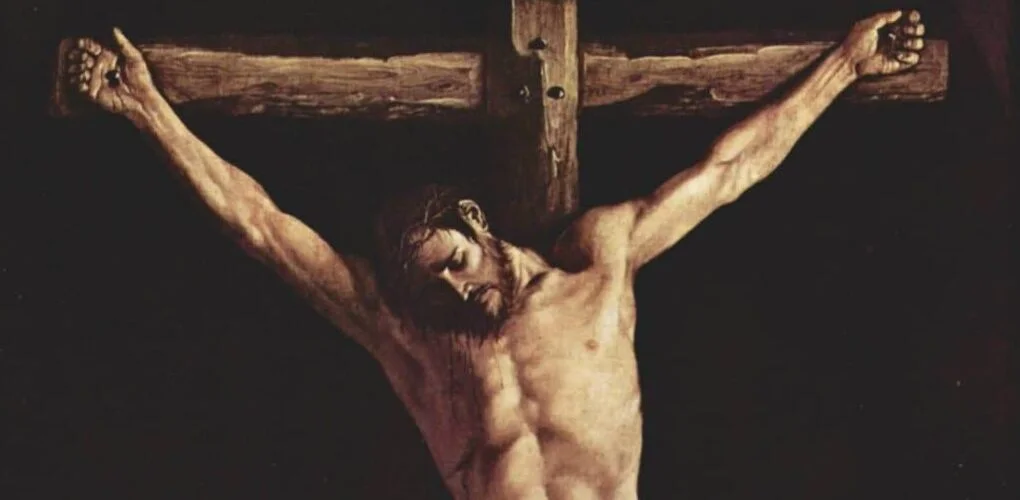
He himself bore our sins in his body upon the cross, so that,
free from sin, we might live for righteousness. By his
wounds you have been healed
Peter 2:24
Richard Pickard

Blessings to All:
Some Catholics today receive the Eucharist at Mass as only a bread wafer and wine and not as the Body and Blood of Jesus Christ. Let us explore together the historical teachings of the early Church on the Eucharist, followed by an examination of modern scientific studies—conducted by various researchers, including some who began as atheists—that provide evidence suggesting the consecrated Eucharist manifests as the body and blood of a living person under extreme stress.
What the Early Church Believed & Taught About the Eucharist
The belief in the Real Presence—that the bread and wine truly become the Body and Blood of Christ—was held from the apostolic era onward. This is evident in writings from the earliest post-New Testament Christians:
St. Ignatius of Antioch (c. 107 AD), in his Letter to the Smyrnaeans (ch. 7), wrote: “They abstain from the Eucharist and from prayer because they do not
confess that the Eucharist is the flesh of our Savior Jesus Christ, flesh which suffered
for our
sins and which that Father, in his goodness, raised up again. This directly
affirms the
Eucharist as Christ s real flesh, countering those who denied its reality.
St. Irenaeus of Lyons (c. 180 AD), in his First Apology (ch. 66), stated: “For not as
common bread nor common drink do we receive these; but since Jesus Christ our
Savior was made incarnate… So too, as we have been taught, the food which has
been made into the Eucharist by the Eucharistic prayer… is both the flesh and the
blood of that incarnated Jesus.”
Bishop Cyril of Jerusalem, in his Catechetical Lectures presented in the middle of
the fourth century, told his listeners: Do
not, therefore, regard the Bread and Wine
as simply that; for they are, according to the Master s declaration, the Body and
Blood
of Christ. Even though the senses suggest to you the other, let faith make you firm.
Now let us look at the Eucharistic Miracles and Scientific evidence reported after examining the Host which have turned
into blood and flesh.
St. Justin Martyr (c. 151 AD), in Against Heresies (Book 5, ch. 2), described how the bread and wine, receiving the Word of God, become the Eucharist, the body of Christ, nourishing believers as such.
These and other early sources (e.g., the Didache, Tertullian, and Origen) consistently
reflect a realist understanding of the
Eucharist as Christ s true Body and Blood, not
merely symbolic—long before later theological terms like transubstantiation
were
formalized.
Eucharistic Miracles Recognized by the Catholic Church
Communion is the Body and Blood of Christ
The Catholic Church does not maintain a single official list of approved
Eucharistic
miracles beyond those investigated and approved by local bishops or
featured in
Vatican approved exhibitions. However, a comprehensive catalog of
over 130 miracles
has been compiled and presented in the 1International
Exhibition of Eucharistic
Miracles, designed by Blessed Carlo Acutis (canonized in
2025) and endorsed by the
Vatican for educational purposes. These miracles span
from the 8th century to the
present and have been vetted through historical,
theological, and (in modern cases)
scientific scrutiny.
The exhibition highlights
events where the Eucharistic species
(bread and/or wine) visibly transformed into
flesh, blood, or other forms, often to
affirm the Real Presence of Christ in the
Eucharist.
Blood Type and Signs of a Living Person Under Stress
Not all Eucharistic miracles involve visible blood or flesh that has been
scientifically
analyzed—many are historical accounts of bleeding hosts, preserved
hosts, or other
phenomena without modern testing. However, in cases where
scientific examinations
have been conducted (typically on more recent or well
preserved relics), the results
show remarkable consistency:
Blood Type: The blood has invariably been
identified as type AB (often AB+). No
other
blood type has been shown. AB blood type
is the rarest blood type globally
(present in
about 4 5% of the population) and also
matches the blood type found
on relics
associated with Jesus, such as the Shroud
of Turin, the Sudarium of Oviedo
( face
cloth that covered Jesus face for burial) ,
and the Tunic of Argenteuil (a
seamless
wool garment believed by many to be Jesus s
tunic from the Passion ).
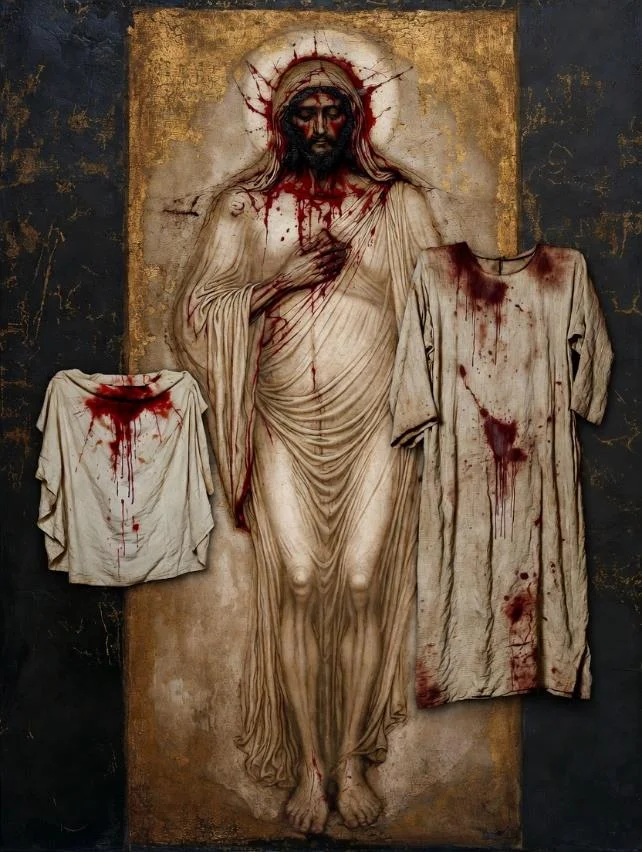
Recognized Eucharistic Miracles Lanciano (Italy, 750 AD):
Analyzed in 1971 by Prof. Odoardo Linoli; blood type AB.
A priest was experiencing doubts in his faith in the Eucharist. While he was striving to better understand the world and the sciences, he continued to struggle in faith that what he was proclaiming as he celebrated Mass was even possible. As he was celebrating Mass one day, during the words of consecration, he saw the bread and wine transformed into actual human flesh and blood. Those in attendance, and those who saw his amazement, spread the news throughout the monastery and surrounding area. Shortly after this happened, the blood on the host coagulated into five globules, which onlookers connected to the five wounds of Jesus, which the flesh remained the same. The matter was investigated and proclaimed a miracle, and the host was placed in a special vessel, which is still on display in Lanciano today.
The fame of this miracle spread throughout the world over the centuries, but in the 20th century, a time when perhaps we needed it most, even more was revealed.
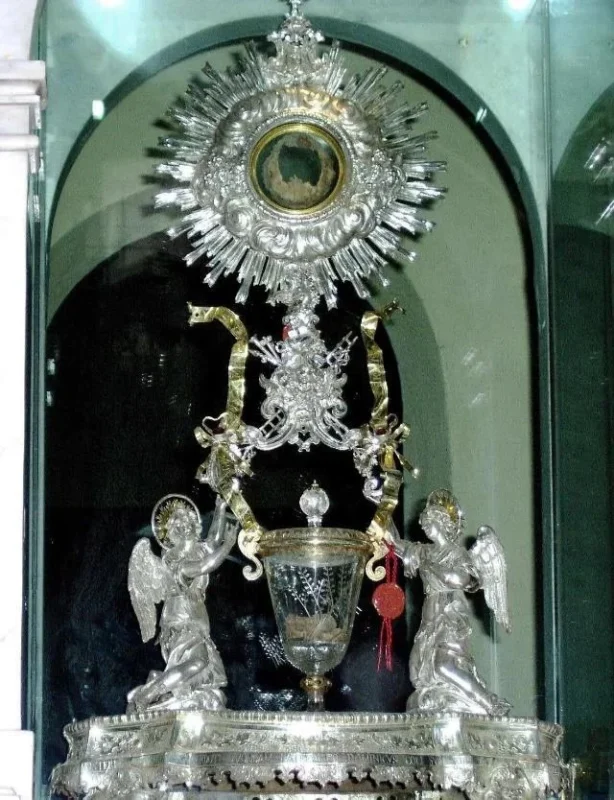
In 1970, Pope Paul VI commissioned a series of studies of the miraculous host of 6 Lanciano. Drs. Ruggero Bertelli and Odoardo Linoli, both doctors of human anatomy and histology, performed separate investigations, which corroborated each other’s findings. Further studies were taken up by the World Health Organization in 1973 and again by Dr. Bertelli in 1981, both of which confirmed the findings and discovered even more information.
So, what did these studies find? The results are truly stunning:
- The flesh has the same structure as heart tissue (myocardium) and the membrane of tissue lining cardiac cavities (endocardium). The flesh was also discovered as being fresh, as opposed to 1,200 years old, with no trace of preservatives.
- The globules of blood were also of human origin and determined to be of type AB. Further, while blood taken from a cadaver would deteriorate quickly, these samples continued to maintain the same properties of fresh blood.
Buenos Aires (Argentina, 1992-1996):
Analyzed by forensic experts, including Dr. Frederick Zugibe; blood type AB.
Dr. Frederick Zugibe (a renowned cardiologist, forensic pathologist, and former chief
medical examiner of Rockland County, NY; adjunct professor at Columbia University)
examined samples starting around 1999–2004 (with formal reports issued in 2005).
He was not initially told the origin of the sample to maintain objectivity.
The tissue was identified as human heart muscle (myocardium) specifically from the
left ventricle.
It showed degenerative changes and inflammation of the myocardial cells, consistent
with severe trauma, stress, or agony (e.g., as if the heart had been under extreme
distress or compromised blood supply shortly before the “snapshot” in time).
7
Notably, white blood cells (leukocytes) were present and intact in large numbers,
indicating the tissue was living or recently living at the time of sampling—despite the
sample having been preserved in water (initially tap water, then distilled/sterile) for
years (up to 3+ years by testing time). White blood cells normally disintegrate quickly
(within minutes to hours) outside a living body, making this preservation
“inexplicable” under normal biological conditions.
Zugibe reportedly exclaimed upon learning the source that this was “an inexplicable
mystery to science—a mystery totally beyond her competence,” and emphasized that
the heart tissue appeared “alive” when examined.
Tixtla (Mexico, 2006):
Analyzed by multiple labs; blood type AB.
The Eucharistic miracle reported in Tixtla, Mexico (October 21, 2006, at the Parish of
San Martín de Tours in the Diocese of Chilpancingo-Chilapa) occurred during a parish
retreat Mass. A consecrated host, held by a religious sister during Communion
distribution, reportedly began to exude a reddish substance resembling blood. The
host was preserved, and the phenomenon drew attention when the substance
appeared to emanate from within rather than being applied externally.
The local bishop, Most Rev. Alejo Zavala Castro, formed a theological commission and,
in 2009, appointed neuropsychologist and researcher Dr. Ricardo Castañón Gómez
(who had previously investigated similar cases in Buenos Aires) to lead scientific
inquiries.
Samples (small fragments of the bloodstained host) were collected and sent
under blinded conditions (to avoid bias) to multiple independent laboratories for
forensic, histological, and biochemical analysis between 2009 and 2012. Results were
presented at a 2013 symposium.
Key scientific findings from the investigations include: The reddish substance was
confirmed as human blood, containing hemoglobin, DNA of human origin, whole blood
components (including immunoglobulins), active red blood cells, active white blood
cells (leukocytes), and macrophages (immune cells engulfing lipids).
Blood type: Consistently identified as AB (often specified as AB positive in accounts),
matching the type reported in other studied Eucharistic miracles (e.g., Lanciano, Italy,
8th century; Buenos Aires, 1990s) and relics like the Shroud of Turin
Tissue identification: The material included heart muscle tissue (myocardium),
specifically cardiac muscle consistent with severe stress or trauma.
“Living” characteristics: Microscopic analysis (including amplification and penetration
studies around 2010) showed the exterior blood had coagulated since October 2006,
but the interior layers remained fresh, with intact and active cells (e.g., white blood
cells persisting unusually long). Blood appeared to flow from inside the host outward
under pressure, as if from a living source—deemed inexplicable by natural means.
Origin confirmation: Forensic studies (using different methodologies) ruled out
external addition or fraud, showing the substance originated from within the host.
Labs and experts involved included (per reports): Patología Médica (Mexico), Gene-Ex
Genetics Laboratory (Bolivia), Professor Lazo at the National Autonomous University
of Mexico (UNAM), and others in international forensic networks coordinated by Dr.
Castañón.
Sokółka (Poland, 2008):
Analyzed by pathologists; blood type AB.
A piece of the altered host was taken and analyzed independently by two experts, Prof.
Maria Sobaniec-Lotowska, MD, and Prof. Stanislaw Sulkowski, MD, in order to ensure
the credibility of the results. Both are histopathologists at the Medical University of
Bialystok. The studies were carried out at the university’s Department of
Pathomorphology.
The two independent studies were in perfect agreement. They concluded that the
structure of the transformed fragment of the host is identical to the myocardial
(heart) tissue of a living person who is nearing death.
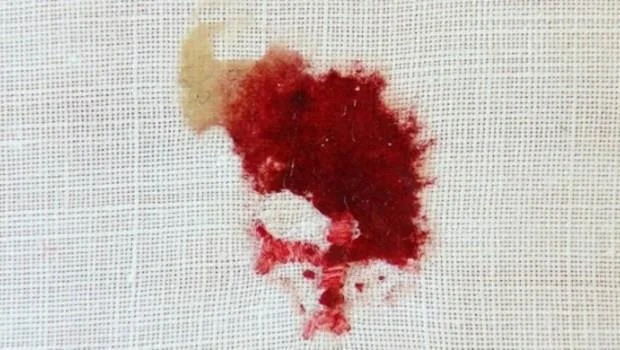
Legnica (Poland, 2013):
Analyzed by forensic medicine departments; blood type AB.
LEGNICA, Poland — On Christmas Day 2013 at St. Hyacinth’s Shrine in Legnica, an
industrial city of 100,000 in southwest Poland, a priest accidentally dropped a
consecrated Host on the floor. In accordance with Church procedures, the Host was
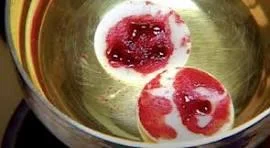
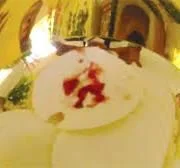
placed in a dish filled with holy water to dissolve. After two weeks, the Communion
wafer dissolved only partially, and a red substance appeared on it.
The bishop of Legnica at the time, Stefan Cichy, formed a committee to study this
unusual phenomenon.
Two independent forensic medicine departments from universities in Wroclaw and
Szczecin studied a sample of the Host. Researchers from Szczecin found human DNA,
as well as tissue from the human heart, with alterations that frequently appear in a
state of agony. From a Living Person Undergoing Stress.
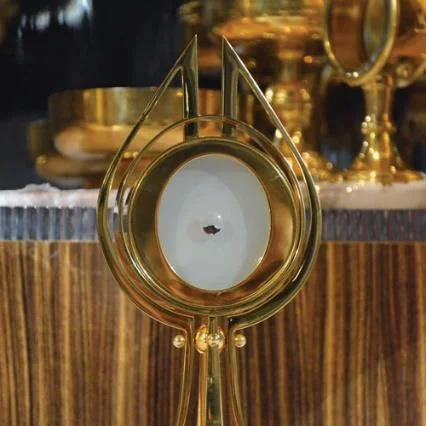
In these analyzed cases, the flesh is consistently identified as human myocardial
(heart) tissue, specifically from the left ventricle. The tissue shows signs of being
“alive” at the time of sampling—meaning it exhibits vitality inconsistent with dead or
preserved material. Moreover, it displays characteristics of severe stress, trauma, or
agony, such as inflammation, infiltration by white blood cells (indicating an immune
response to injury), and no signs of decomposition despite centuries of exposure in
some cases. For instance: In Lanciano, the heart tissue was described as “fresh” and
belonging to a living human heart.
In Buenos Aires , Dr. Zugibe noted the tissue was from a heart that had suffered
“severe stress,” with cells beating as if alive under microscopic examination.
In Tixtla , the tissue showed signs of a person in “extreme agony,” with living cardiac
cells and no preservatives.
Similar findings in Sokółka and Legnica: heart muscle in a state of distress, as if
from someone enduring torture or a heart attack.
These scientific consistencies across independent analyses (often by non-religious
experts) show evidence of divine intervention that the Eucharist is truly the Body and
Blood of Our Savior, Jesus Christ. .
Miracles Associated with the Eucharist
The Miracle of Nohad El Shami (1993)
Background: , In January 1993, 55-year-old Nohad El Shami, a mother of 12, suffered
a severe stroke leading to hemiplegia (paralysis affecting one side of her body) due to
blocked cerebral arteries. Doctors declared her condition irreversible with no medical
treatment available. She endured constant pain and immobility.
The Healing: Her son visited the hermitage of St. Charbel in Annaya, Lebanon,
seeking intercession. That night (January 21, 1993), Nohad had a vivid dream: She
saw St. Charbel (accompanied by St. Maron) at her bedside. One monk held her while
St. Charbel appeared to perform a surgical operation on her neck. In another related
vision/dream, St. Charbel administered Holy Communion to her during a Mass in his
hermitage.
Immediate Result: Upon waking, Nohad found herself completely healed—she could
move freely, with no residual paralysis or pain. St. Charbel appeared again in a
subsequent dream, saying: “I did the surgery to let people see and return to their
faith. I ask you to visit my hermitage in Annaya on the 22nd of every month and
attend Mass regularly for the rest of your life.”
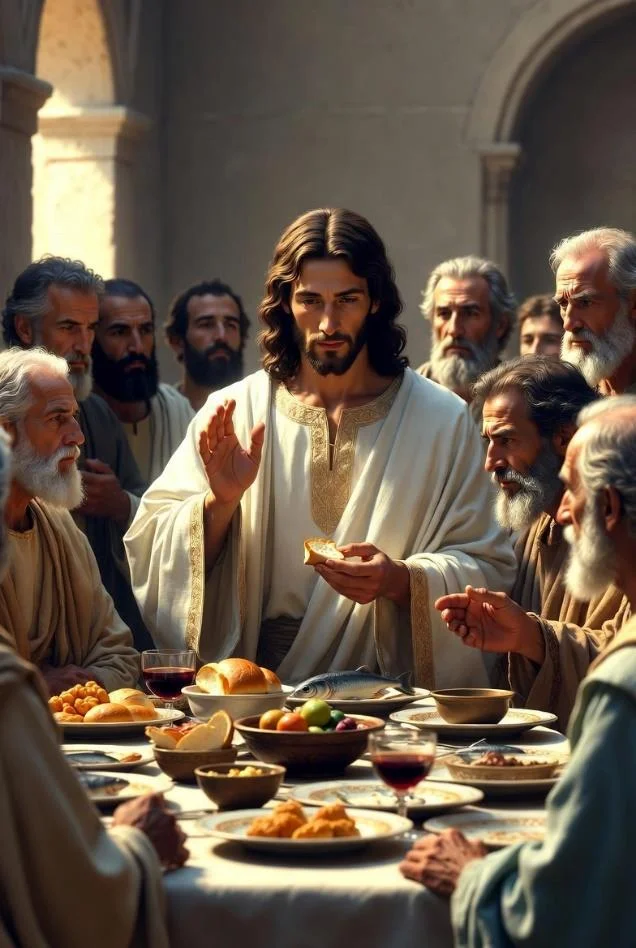
Aftermath: Medical examinations confirmed the inexplicable recovery. Thousands now
gather monthly on the 22nd at Annaya for Mass in thanksgiving for this miracle,
drawing Catholics, Orthodox Christians, and even some Muslims. The event is widely
regarded in Catholic tradition as a sign of the healing power accessible through the
Eucharist and saintly intercession.
This miracle highlights the belief that Christ, truly present in the Blessed Sacrament,
can bring physical and spiritual healing—even through visionary reception of
Communion when physical access is limited. While not a “classic” Eucharistic miracle
(like a bleeding host), it ties directly to the Eucharist’s role in healing, echoing Gospel
accounts of Jesus curing the paralytic (e.g., Mark 2:1-12) and early Church teachings
on the Real Presence as a source of grace.
Other accounts of healings (including paralysis) during Eucharistic adoration or
Communion exist in personal testimonies and saints’ lives (e.g., St. Alice of
Schaerbeek, who endured paralysis but found consolation in the Eucharist), but
Nohad’s is one of the more prominent modern examples tied to receiving the
Sacrament.
Ann de Clery (Metz, France, 19th century)
A young woman named Ann de Clery
suffered from an incurable paralysis starting
at age 13, lasting nearly 10 years. She was
thin, weak, unable to digest food properly,
and endured violent headaches and intense
pain daily. Despite this, she remained
resigned to God’s will and embroidered altar
cloths while bedridden. A priest brought her
Holy Communion weekly. One day, carried to
church by her family (a nurse supporting her
on her knees at age 23), she fixed her gaze
on the Blessed Sacrament and prayed: “Lord,
you can heal me if you so desire.” A violent
pain initially racked her body, but she
persisted in prayer before the Eucharist.
Suddenly, she was completely healed—all
ailments vanished, including the paralysis,
with no lingering weakness typical after long
illness. She returned home unaided, knelt in
thanksgiving, and hundreds witnessed the
miracle. This account appears in Fr. Michael Muller’s classic work The Blessed
Eucharist (19th century).

Mrs. Ann Mattingly (Washington, D.C., 1824)
Mrs. Ann Mattingly endured a dangerous, incurable cancer for seven years and was
near death. She made a novena to the Most Holy Name of Jesus and received Holy
Communion at the end of it. In that moment, uttering “Lord Jesus, thy holy will be
glorified!”, she swallowed the Host despite extreme difficulty (her tongue parched and
rough). Instantly, all pain left her—she was fully healed of the cancer and associated
suffering (which included severe debilitation bordering on immobility). Hundreds
visited her home that day to see the miracle. Also, from Fr. Muller’s The Blessed
Eucharist.
Julia (Modern case, 2017 – Eucharistic Adoration)
A young woman named Julia was bed-bound due to severe illness (details include
chronic debilitating conditions leading to immobility). On April 1, 2017, during her
family’s regular Saturday Holy Hour in an adoration chapel, she experienced a
profound encounter with Jesus in the Blessed Sacrament. She described it as the
same Jesus who healed the paralytic in John 5:8 extending healing across time. She
was miraculously freed from the illness that kept her confined to bed. Today, she is
13
healthy and active, crediting the Real Presence in Eucharistic adoration. Shared in
interviews and Catholic media (e.g., Aleteia).
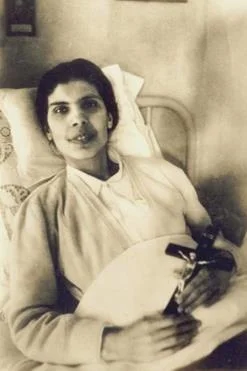
Blessed Alexandrina da Costa (Portugal, 20th century )
While not a direct “healing from paralysis via Eucharist”, Alexandrina
remained bedridden and paralyzed for ~30 years as a victim soul. Blessed
Alexandrina lived exclusively on the Eucharist for over 13 years (no food
or water otherwise), subsisting solely on daily Holy Communion from
1942 until her death in 1955. Her paralysis stemmed from earlier
illness/injury, yet the Eucharist sustained her miraculously, defying
biology. She is often cited in Eucharistic miracle discussions for the power
of Communion to give life and strength amid physical suffering. Beatified
by St. John Paul II in 2004.
These examples echo biblical healings (like the paralytic in Mark 2) and highlight the
Church’s teaching that the Eucharist brings both spiritual and sometimes physical
restoration. Many such stories come from personal testimonies, saints’ biographies, or
parish records rather than formal Vatican-approved miracles (unlike some Eucharistic
phenomena like bleeding hosts). They inspire faith in the Real Presence as a source of
grace and healing.
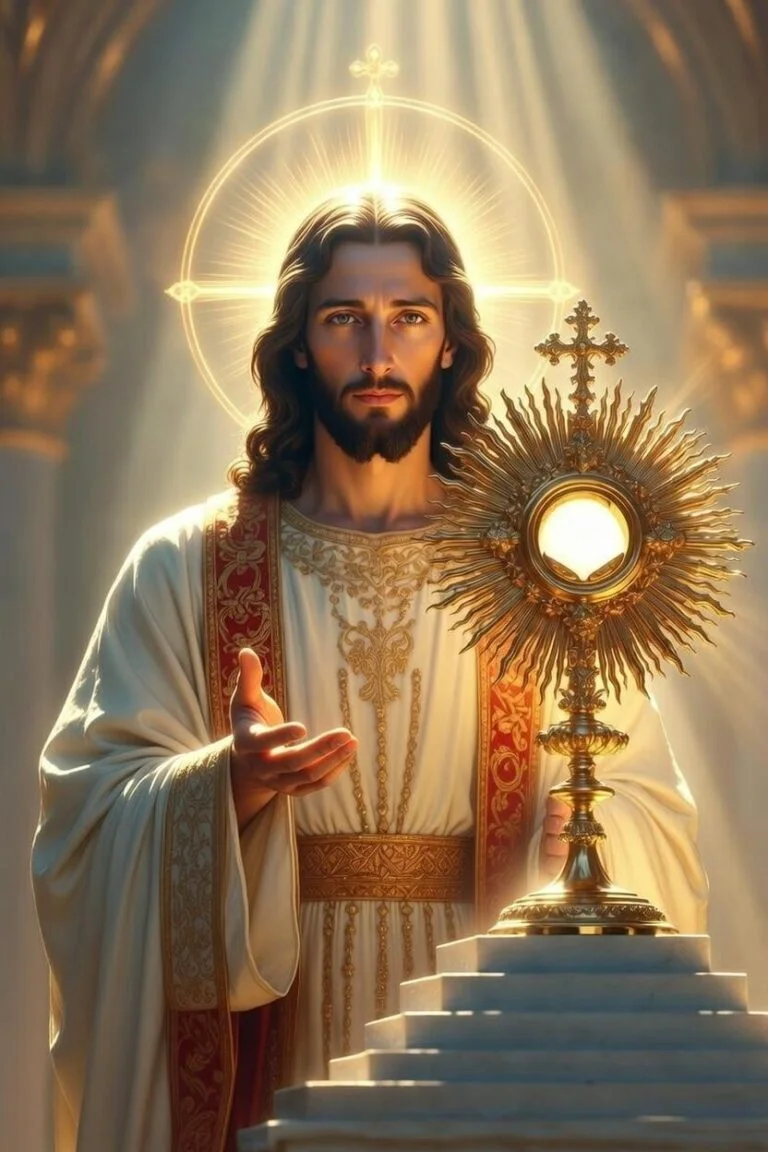
This is My Body, Given up for You
Song by: Jelly Roll
The Cross Was Enough
-
Verse 1 I was broken, lost, and guilty Chains of sin wrapped around my soul But on a hill called Calvary Your blood was spilled to make me whole
Every nail drove love much deeper Every thorn crowned You as King Though the world turned its back upon You… You gave Your life to set me free - Chorus The cross was enough The grave couldn't win Your mercy reached farther than all of my sin Love poured out when You gave up Your breath Jesus, You saved me through life and through death
- Verse 2 I see Your hands, they bear the story Scars that shout of amazing grace Every drop of blood still whispers "I took your place, I took your shame" The stone rolled back, the tomb lay empty Hope was born on that third day Now I'm alive, and I'll keep singing Jesus is risen, He's the way
- Chorus The cross was enough The grave couldn't win Your mercy reached farther than all of my sin Love poured out when You gave up Your breath Jesus, You saved me through life and through death
- Bridge No greater love the world has known Than a Savior bleeding for His own Every tear, every cry You heard Every promise fulfilled by Your word
- Chorus The cross was enough The grave couldn't win Your mercy reached farther than all of my sin Love poured out when You gave up Your breath Jesus, You saved me through life and through death
- Outro Oh Jesus, thank You for the cross For every nail, for every cause Forever I'll sing, forever I'll know Your sacrifice saved my soul
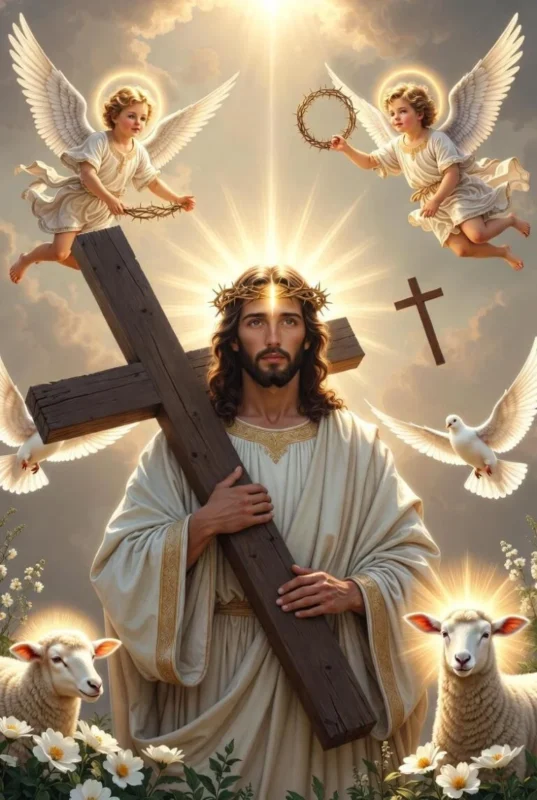
Jesus Saved Me by His Cross and Resurrection. Thank you Jesus.
The International Catholic Family Newsletter Is Published Monthly
Our mission statement is to motivate people to pray and to be
Christian examples in their work, home and with others, for
those needing the Light in a world of Darkness.
The Rosary is the ‘weapon’ for these times. – St. Padre Pio