
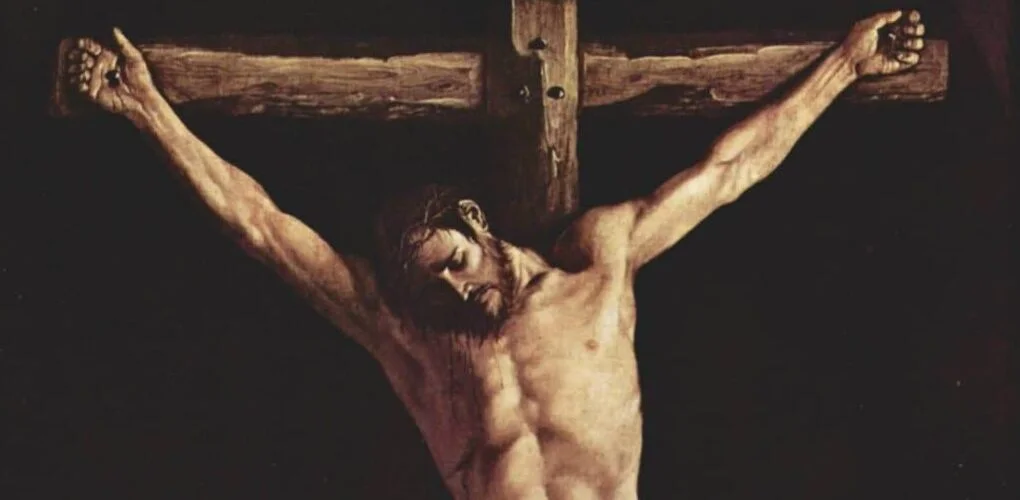
Bringing Light Into a World of Darkness
The Essence of Life...
Padre Pio Gave Me Sight...
Christ Called Me Off the Minaret...
Easter in Nigeria..
THOUGHT FOR TODAY
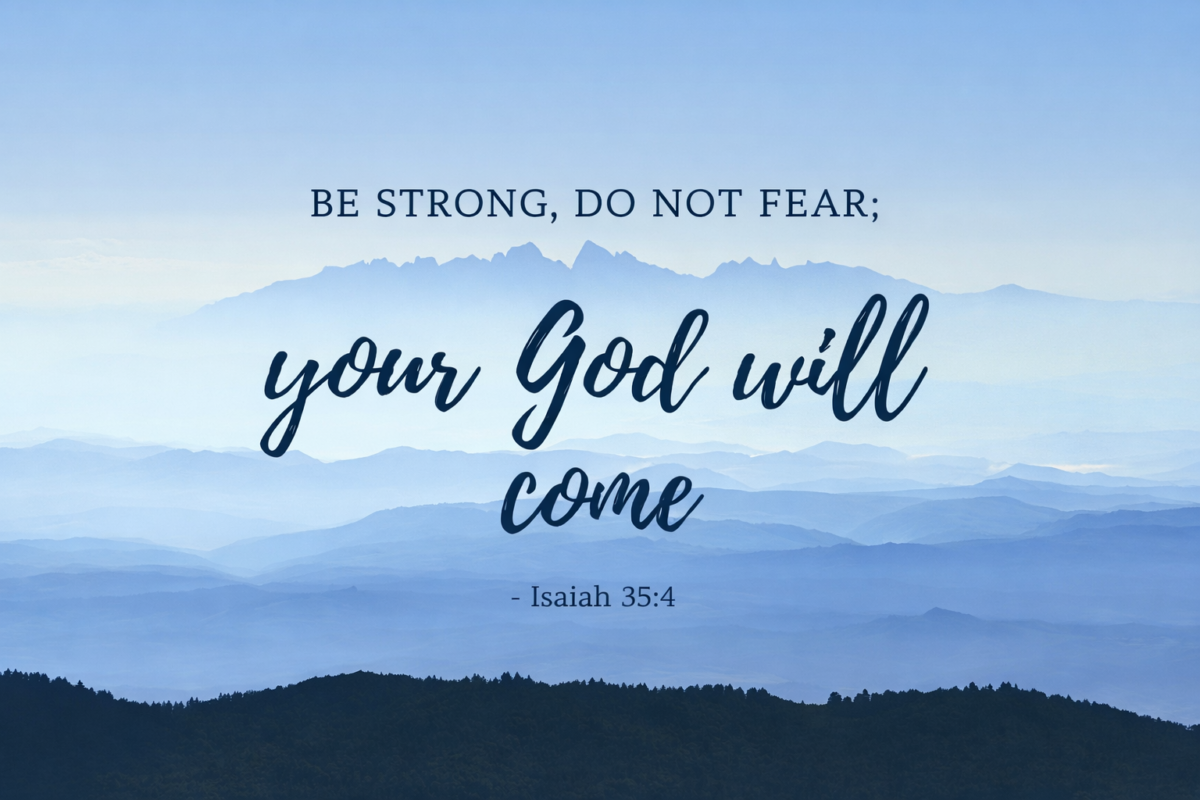
March 18, 2026 Annual Message to Mirjana, Our Lady of Medjugorje
“Dear children, never forget how great is
the love of God. Through that love I am
with you. Do not forget how great is His
mercy. Through that mercy I am showing
you the way to true happiness and perfect
peace. That is the way to my Son.
Therefore, my children, with complete
trust, abandon yourselves to my Son and
do not be afraid. Do not be afraid of the
future because it belongs entirely to the
will of my Son. Therefore, my children,
renounce everything that distances you
from my Son: false happiness, false hope,
false splendor. Trust my Son. Tell Him
about your pains, sufferings, desires and
hopes. You will feel His love and His
blessing. Thank you!” (With ecclesiastical
approval)
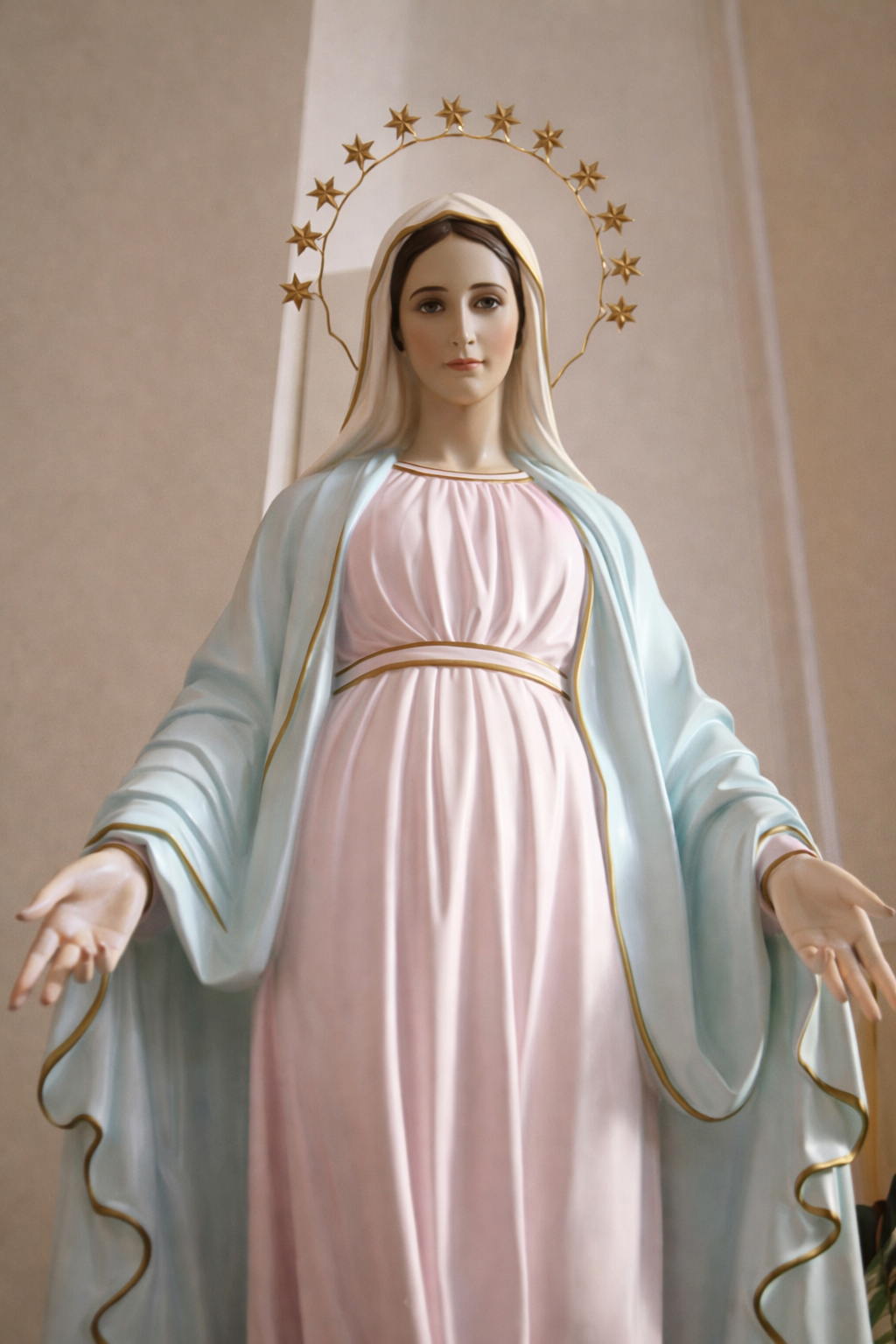
Be Not Afraid
By; John Michael Talbot
Be not afraid
I go before you always
Come follow me
And I will give you rest
I go before you always
Come follow me
And I will give you rest
You shall cross the barren desert
But you shall not die of thirst
You shall wander far in safety
Though you do not know the way
You shall speak your words in foreign lands
And all will understand
You shall see the face of God and live
But you shall not die of thirst
You shall wander far in safety
Though you do not know the way
You shall speak your words in foreign lands
And all will understand
You shall see the face of God and live
Blessed are your poor
For the kingdom shall be theirs
Blessed are you that weep and mourn
For one day you shall laugh
And if wicked men insult and hate you all because of me
Blessed, blessed are you
For the kingdom shall be theirs
Blessed are you that weep and mourn
For one day you shall laugh
And if wicked men insult and hate you all because of me
Blessed, blessed are you
By: Richard Pickard
Blessings to All:
The Essence of Life
The essence of our life defines what we are at our most basic level, distinct from our
outward appearance. Our soul is our immortal core. Gifted to us by God, to give us
the true source for what is good and bad. But we have all drifted away from God
through our mistakes, sins against one another, and forgetting how important one
human life is to Our Creator and His Son Jesus Christ.
Many of us spend more time on our iPhone or watching TV then we spend with our
family. Our children need our direction in life more than ever. The devil has
been let loose on the face of the earth. I believe we are in those days written about in
Revelation.
Christ has already won through His cross, evil will not prevail, and those who
persevere in faith will inherit eternal life with Him. Whether the most intense current
events are the revealing of the future, the call to conversion is the same—stay
faithful, worship truly, endure patiently, and live in light of the certain hope that
“Behold, I am coming soon” (Rev 22:12, 20).
Renew your faith now. Go to Jesus directly and talk to Him about your goals, pains,
sorrows, and to ask Him to watch over you and your family. Ask Jesus….He wants to
hear from you. Don’t wait any longer about asking for His grace to be a better
person. Start a journey today, towards increasing time with your family. Listening to
them and love them, no matter how they are living their lives. Don’t judge them if
they are not living a Christian lifestyle. Your prayers and sacrifices “do make a
difference”.
Once you bring Jesus into life, your soul…your core….of what you really are, will find
peace and trust in Jesus.
We are not another species of animals, but truly different. Designed by God to be able
to love. We see the example of what true love is, by the life of Jesus. A human like us
who entered into human life through the Blessed Mother. Of whom the angel Gabriel
announced to her…”Hail, full of grace, the Lord is with thee,” and he assured her, “Do
not be afraid, Mary, for you have found favor with God”.
Mary was born without original sin. The same as Eve. But Mary, unlike Eve, became
the Mother of Jesus and the Mother of all those who are called by God to eternal life,
through the sacrifice of her Son, Jesus. He took the punishment meant for us, upon
Himself. This act of sacrificial love, described in Isaiah 53:5 and 1 Peter 2:24, brought
peace, healing, and reconciliation with God, allowing believers to be free from
condemnation.
Isaiah 53:5 is a central Messianic prophecy detailing that Jesus was
pierced for transgressions and crushed for our iniquities, bearing
punishment to bring humanity peace and healing. It highlights
that through his suffering (“stripes” or “wounds”), spiritual and
physical healing is made available, reconciling people to God.
1 Peter 2:24 states: “He himself bore our sins in his body on the
tree, that we might die to sin and live to righteousness. By his wounds you have been healed.”
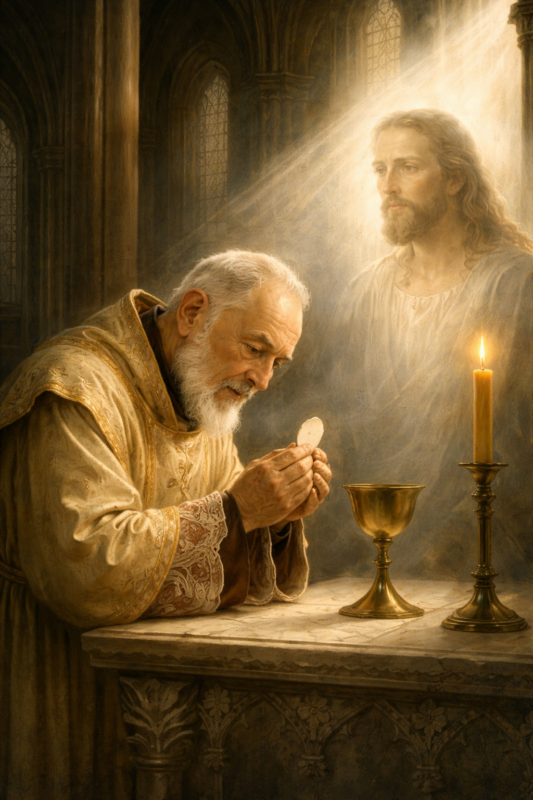
For those who wonder if our prayers make a difference. This is a true story
about St. Padre Pio praying for his grandfather who had died 20 years
earlier…” Padre Pio explained that he could pray for his grandfather’s happy death 20
years after he died because God exists outside of time. God, in His mercy, knew at
the moment of the grandfather’s death that Padre Pio would pray for him later,
allowing the graces to be applied retroactively.”
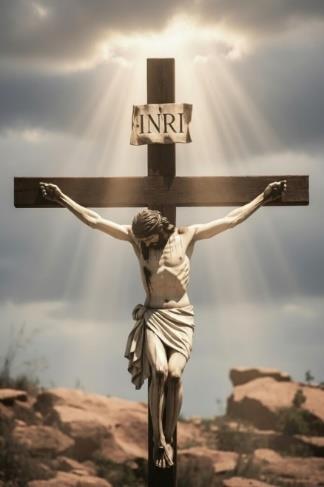
Talk to Jesus tonight. Tell Him what is on your mind. What bothers
you. Forgive those who have hurt you. Jesus did it for You.
THE HEALING OF GEMMA DI GIORGI BORN BLIND WITH NO PUPILS
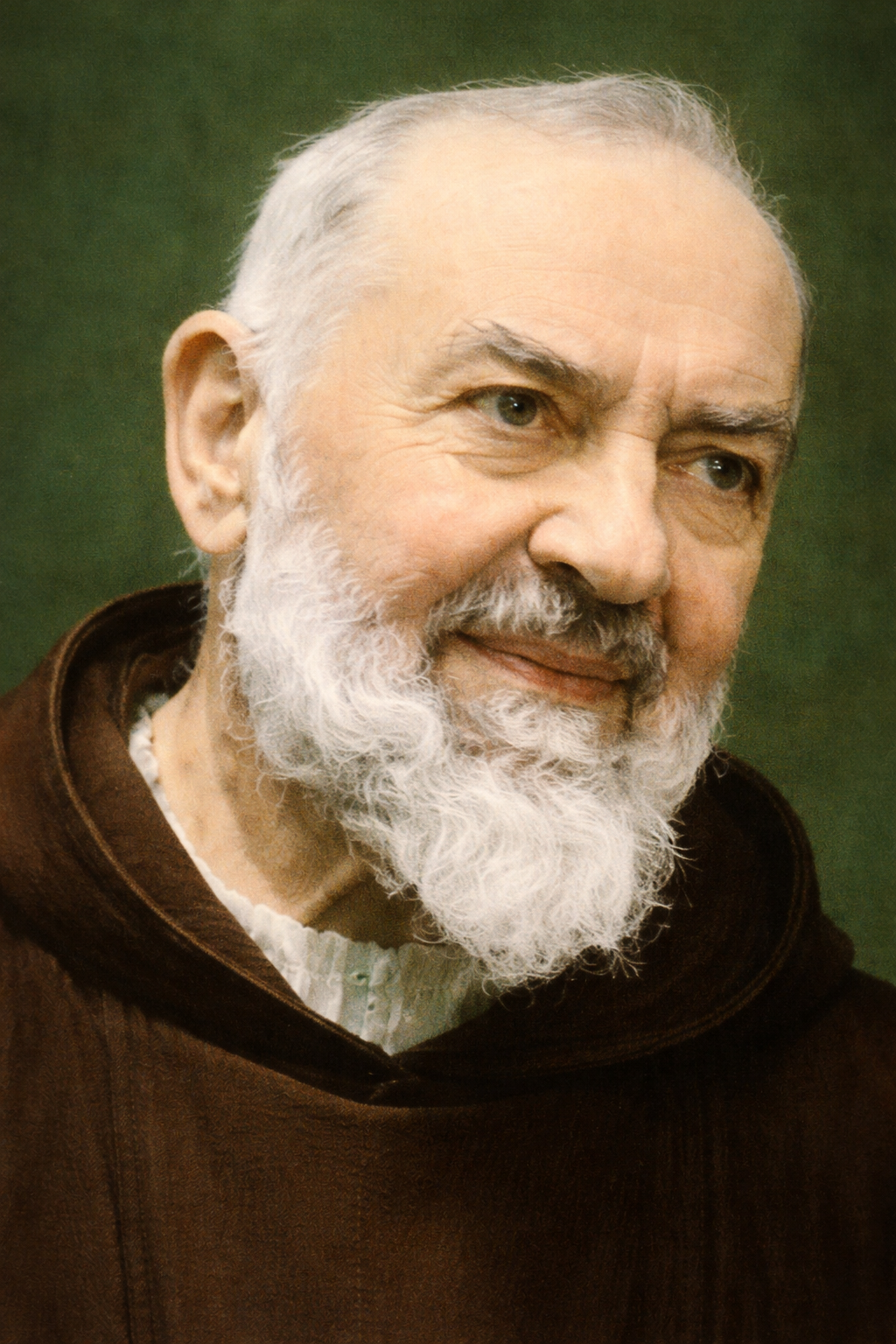
Giorgi
Among the many miracles of healing attributed to Padre Pio, some
are so unusual and unique that they have been the subject of
much attention and discussion. In these particular cases, the
person who has been healed lives a completely normal life
afterward, even though they continue to have all the physical
symptoms of their illness. From a scientific viewpoint, they still
suffer from the original condition. One such person is Gemma di
Gemma di Giorgi was born on Christmas day in 1939, in the Sicilian town of Ribera.
Almost immediately, her mother realized that something was wrong with her eyes.
The truth was, Gemma was blind. Her mother took her to a doctor who was unable to
determine the gravity of her condition. She was then referred to two eye specialists in
Palermo.
The specialists determined that Gemma had no pupils in her eyes, that nothing could
be done for her blindness, and that her condition was inoperable. Gemma’s family was
desperate, but there was nothing they could do. Her parents often took her to the
Virgin Mary’s altar in the parish church in Ribera to pray because they felt it would
take a miracle to heal her eyes. A relative who was a nun, advised the family to seek
out Padre Pio. Her advice gave the family a ray of hope. Gemma’s grandmother asked
the nun to write a letter to Padre Pio on Gemma’s behalf.
When the nun returned to her convent, she wrote to Padre Pio asking him to pray for
Gemma. One night the nun saw him in a dream. Padre Pio asked her, “Where is this
Gemma for whom so many prayers are being offered that they are almost deafening?’
In her dream she introduced Gemma to Padre Pio and he made the sign of the cross
on her eyes. The next day the nun received a letter from Padre Pio in which he wrote,
“Dear daughter, rest assured that I will pray for Gemma. I send you my best wishes.”
The nun was struck by the coincidence of the dream and the letter that followed so
she wrote to the family and encouraged them to take Gemma to see Padre Pio. And so
it was, that in 1947, the grandmother took 7 year old Gemma to San Giovanni
Rotondo to see Padre Pio, praying and hoping all the while for a miracle.
On the trip from Sicily to San Giovanni Rotondo, Gemma’s eyesight began
mysteriously functioning. About halfway to their destination, Gemma began to see the
sea and a steamship and she told this to her grandmother. At Gemma’s words, her
grandmother as well as other friends who were accompanying them, all began to
pray. Nevertheless, the trip from Sicily to the monastery was very long and difficult.
Gemma’s grandmother was still preoccupied with the idea of seeking Padre Pio’s
intercession regarding Gemma’s eyesight.
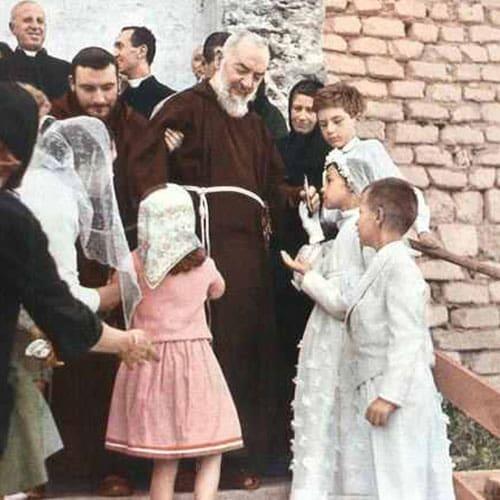
At San Giovanni Rotondo, in the midst of a large
group of people, Padre Pio singled Gemma out and
called her by name. He heard her confession, and
even though she made no mention of her blindness,
he touched her eyes with the wounded part of his
hand, tracing the sign of the cross. At the end of the
confession, as he blessed her, he said, “Sii buona e
santa” (Be good and be saintly).
The grandmother was upset that Gemma had
forgotten to ask Padre Pio for the grace of a healing
while she was in the confessional and so she began
to cry.
Gemma became upset also and began to cry. The grandmother went to
confession to Padre Pio and in her own words, “I asked the grace for Gemma and I
told Padre Pio that Gemma was weeping because, in her confession with him she had
forgotten to ask this grace. I will never forget his soft and tender voice as he
answered me with these words, “Do you have faith, my daughter? The child must not
weep and neither must you for the child sees, and you know she sees.” I understood
then that Padre Pio was alluding to the sea and the ship Gemma had seen during the
trip and that God had used Padre Pio to break through the darkness that covered
Gemma’s eyes.” The same day, Padre Pio gave Gemma her first Holy Communion and
again made the sign of the cross over each of her eyes.
When Gemma returned to Sicily her eyes were again examined by a specialist. The
doctor, to test Gemma, held up various objects in front of her and she was able to see
each one of them. She was able to count the doctor’s fingers at a distance of sixteen
feet. Gemma, even though without pupils, had her eyesight; she could see. The
doctor declared that it was impossible for Gemma to see and yet she was able to.
There was no medical explanation for it.
Many doctors from all over Italy requested to examine Gemma’s eyes. This
extraordinary cure, and the prophecy preceding it, aroused enormous interest in the
Italian press during the summer of 1947. Gemma’s sight continued to improve and
she was able to go to school and learn how to read and write. She was able to lead a
perfectly normal life.
Clarice Bruno, author of the book, “Roads to Padre Pio” met Gemma in May of 1967.
Clarice said that despite the fact that Gemma’s eyesight was functioning, she still had
the appearance of a blind person. Clarice told Gemma that she was writing a book
about Padre Pio and wanted to include in it the story of Gemma’s miracle. Gemma
asked Padre Pio for permission to share her story and he gave his consent. Gemma,
due to the sunny and very windy weather, was wearing sunglasses on the day she
made the request of Padre Pio. He commented on this. “Why,” he said as he passed
his hand over her eyes, “are you wearing glasses? You see very well.”
Father John Schug, who met Gemma and interviewed her, also testified, “She looks
like a blind person. Her eyes are sallow and lusterless, but there is no doubt that she
can see. I saw her reach for a phone book, check a number, and dial the number
without groping.”
While the doctors could not all come to a consensus on the subject of Gemma di
Giorgi’s medical condition, the facts that can be definitely established are these: (1)
Gemma di Giorgi was born with a severe congenital defect of the eyes; (2) before the
prayers of Padre Pio were enlisted, she was unable to see and (3) afterward, though
the physical structure of her eyes remained unchanged, Gemma was able to see
normally.
So, what must the conclusion be? Simply that while Gemma and her grandmother
were traveling to San Giovanni Rotondo to ask for healing, the grace came to them
through the intercession of Padre Pio’s prayers before they had even arrived at their
destination. Gemma has since traveled the world telling her story.
Christ Called Me Off the Minaret
NABEEL QURESHI
Through investigations, dreams, and visions, Jesus asked me to forsake my Muslim family.
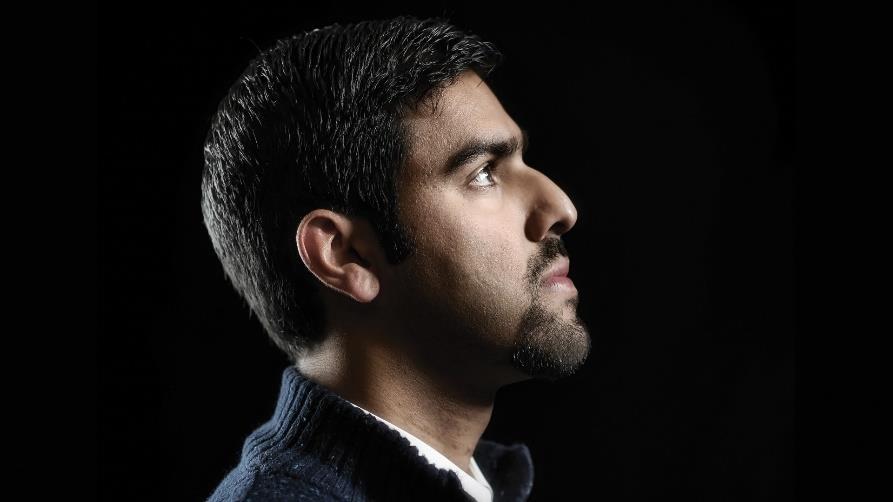
April 13, 1983 – September 16, 2017
THIS ARTICLE APPEARED IN THE JANUARY/FEBRUARY 2014 ISSUE OF CHRISTIANITY
TODAY. AS “CALLED OFF THE MINARET”.
TODAY. AS “CALLED OFF THE MINARET”.
Nabeel Qureshi is an itinerant speaker and author of Seeking Allah, Finding Jesus: A
Devout Muslim’s Journey to Christ (Zondervan).
“Allahu Akbar. I bear witness that there is no god but Allah. I bear witness
that Muhammad is the messenger of Allah.”
that Muhammad is the messenger of Allah.”
These are the first words of the Muslim call to prayer. They were also the first words
ever spoken to me. Moments after I was born, I have been told, my father softly
recited them in my ear, as his father had done for him, and as all my forefathers had
done for their sons since the time of Muhammad.An Islamic militant group known as Al-Shabab is committed to eradicating Christianity
from Somalia. This means that those who are believed to be Christians could face
house arrest, forced marriage, or death. Being Muslim is strongly tied to Somali
identity. Since most Christians in Somalia are formerly Muslims, their conversion is
seen as a betrayal of what it means to be Somali.
We are Qureshis, descendants of the Quresh tribe—Muhammad’s tribe. Our family
stood sentinel over Islamic tradition.
The words my ancestors passed down to me were more than ritual: they came to
define my life as a Muslim in the West. Every day I sat next to my mother as she
taught me to recite the Qur’an in Arabic. Five times a day, I stood behind my father
as he led our family in congregational prayer.
By age 5, I had recited the entire Qur’an in Arabic and memorized the last seven
chapters. By age 15, I had committed the last 15 chapters of the Qur’an to memory in
both English and Arabic. Every day I recited countless prayers in Arabic, thanking
Allah for another day upon waking, invoking his name before falling asleep.
But it is one thing to be steeped in remembrance, and it is quite another to bear
witness. My grandfather and great-grandfather were Muslim missionaries, spending
their lives preaching Islam to unbelievers in Indonesia and Uganda. My genes carried
their zeal. By middle school, I had learned how to challenge Christians, whose
theology I could break down just by asking questions. Focusing on the identity of
Jesus, I would ask, “Jesus worshiped God, so why do you worship Jesus?” or, “Jesus
said, ‘the Father is greater than I.’ How could he be God?” If I really wanted to throw
Christians for a loop, I would ask them to explain the Trinity. They usually responded,
“It’s a mystery.” In my heart I mocked their ignorance, saying, “The only mystery
here is how you could believe in something as ridiculous as Christianity.”
Bolstered by every conversation I had with Christians, I felt confident in the truth of
Islam. It gave me discipline, purpose, morals, family values, and clear direction for
worship. Islam was the lifeblood that coursed through my veins. Islam was my
identity, and I loved it. I boldly issued the call of Islam to anyone and everyone who
would listen, proclaiming that there is no God but Allah and that Muhammad is his
messenger.
And it was there, atop the minaret of Islamic life, that Jesus called to me.
Not the Man I Thought…
As a freshman at Old Dominion University in Virginia, I was befriended by a
sophomore, David Wood. Soon after he extended a helping hand, I found him reading
a Bible. Incredulous that someone as clearly intelligent as he would actually read
Christians’ sacred text, I launched a barrage of apologetic attacks, from questioning
the reliability of Scripture to denying Jesus’ crucifixion to, of course, challenging the
Trinity and the deity of Christ.
David didn’t react like other Christians I had challenged. He did not waver in his
witness, nor did he waver in his friendship with me. Far from it—he became even
more engaged, answering the questions he could respond to, investigating the
questions he couldn’t respond to, and spending time with me through it all.
Even though he was a Christian, his zeal for God was something I understood and
respected. We quickly became best friends, signing up for events together, going to
classes together, and studying for exams together. All the while we argued about the
historical foundations of Christianity. Some classes we signed up for just to argue
some more.
After three years of investigating the origins of Christianity, I concluded that the case
for Christianity was strong—that the Bible could be trusted and that Jesus died on the
cross, rose from the dead, and claimed to be God.
Then David challenged me to study Islam as critically as I had studied Christianity. I
had learned about Muhammad from imams and my parents, not from the historical
sources themselves. When I finally read the sources, I found that Muhammad was not
the man I had thought. Violence and sensuality dripped from the pages of his earliest
biographies, the life stories of the man I revered as the holiest in history.
Shocked by what I learned, I began to lean on the Qur’an as my defense. But when I
turned an eye there, that foundation crumbled just as quickly. I relied on its
miraculous knowledge and perfect preservation as a sign that it was inspired by God,
but both beliefs faltered.
Overwhelmed and confused by the evidence for Christianity and the weakness of the
Islamic case, I began seeking Allah for help. Or was he Jesus? I didn’t know any
longer. I needed to hear from God himself who he was. Thankfully, growing up in a
Muslim community, I had seen others implore Allah for guidance. The way that
Muslims expect to hear from God is through dreams and visions.
1 Vision, 3 Dreams…
In the summer after graduating from Old Dominion, I began imploring God daily. “Tell
me who you are! If you are Allah, show me how to believe in you. If you are Jesus,
tell me! Whoever you are, I will follow you, no matter the cost.”
By the end of my first year in medical school, God had given me a vision and three
dreams, the second of which was the most powerful. In it I was standing at the
threshold of a strikingly narrow door, watching people take their seats at a wedding
feast. I desperately wanted to get in, but I was not able to enter, because I had yet to
accept my friend David’s invitation to the wedding. When I awoke, I knew what God
was telling me, but I sought further verification. It was then that I found the parable
of the narrow door, in Luke 13:22–30. God was showing me where I stood.
But I still couldn’t walk through the door. How could I betray my family after all they
had done for me? By becoming a Christian, not only would I lose all connection with
the Muslim community around me, my family would lose their honor as well. My
decision would not only destroy me, it would also destroy my family, the ones who
loved me most and sacrificed so much for me.
For Muslims, following the gospel is more than a call to prayer. It is a call to die.
I began mourning the impact of the decision I knew I had to make. On the first day of
my second year of medical school, it became too much to bear. Yearning for comfort,
I decided to skip school. Returning to my apartment, I placed the Qur’an and the Bible
in front of me. I turned to the Qur’an, but there was no comfort there. For the first
time, the book seemed utterly irrelevant to my suffering. Irrelevant to my life. It felt
like a dead book.
With nowhere left to go, I opened up the New Testament and started reading. Very
quickly, I came to the passage that said, “Blessed are those who mourn, for they will
be comforted.”
Electric, the words leapt off the page and jump-started my heart. I could not put the
Bible down. I began reading fervently, reaching Matthew 10:37, which taught me that
I must love God more than my mother and father.
“But Jesus,” I said, “accepting you would be like dying. I will have to give up
everything.”
The next verses spoke to me, saying, “He who does not take his cross and follow after
me is not worthy of me. He who has found his life will lose it, and he who has lost his
life for my sake will find it” (NASB). Jesus was being very blunt: For Muslims,
following the gospel is more than a call to prayer. It is a call to die.
Betrayal…
I knelt at the foot of my bed and gave up my life. A few days later, the two people I
loved most in this world were shattered by my betrayal. To this day my family is
broken by the decision I made, and it is excruciating every time I see the cost I had to
pay.
But Jesus is the God of reversal and redemption. He redeemed sinners to life by his
death, and he redeemed a symbol of execution by repurposing it for salvation. He
redeemed my suffering by making me rely upon him for my every moment, bending
my heart toward him. It was there in my pain that I knew him intimately. He reached
me through investigations, dreams, and visions, and called me to prayer in my
suffering. It was there that I found Jesus. To follow him is worth giving up everything.
St Jude the Apostle of the Impossible
The apostle St. Jude is distinguished from the Iscariot by the surname of Thaddaus,
which signifies in Syriac praising or confession (being of the same import with the
Hebrew word Judas), also by that of Lebbaeus, which is given him in the Greek text of
St. Matthew. St. Jude was brother to St. James the Less, as he styles himself in his
epistle; likewise of St. Simeon of Jerusalem, and of one Joses, who are styled the
brethren of our Lord, and were sons of Cleophas and Mary, sister to the Blessed
Virgin.
This apostle’s kindred and relation to our Saviour exalted him not so much in his
Master’s eyes as his contempt of the world the ardour of his holy zeal and love, and
his sufferings for his sake.
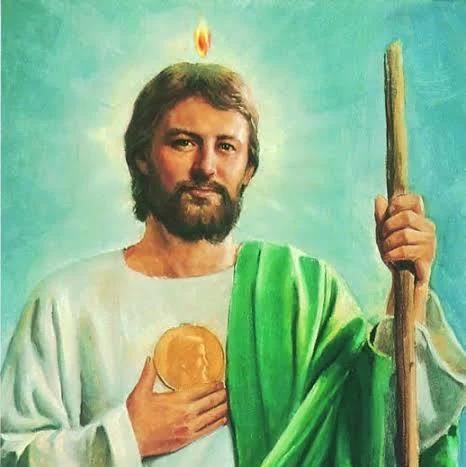
It is not known when and by what means he became a
disciple of Christ, nothing having been said of him in the gospels before we find him
enumerated in the catalogue of the apostles. After the last supper, when Christ
promised to manifest himself to everyone who should love him, St. Jude asked him
why he did not manifest himself to the world? By which question he seems to have
expressed his expectation of a secular kingdom of the Messias. Christ by his answer
satisfied him that the world is unqualified for divine manifestations, being a stranger
and an enemy to what must fit souls for a fellowship with heaven; but that he would
honour those who truly love him with his familiar converse and would admit them to
intimate communications of grace and favour. The sheer number of Christians and moderate Muslims killed or displaced has sent
chills down the spines of many, including Andrew Boyd, spokesman for Release
International, which serves the persecuted church in some 30 countries. He described
the report’s finding as “a staggering death toll.”
After our Lord’s ascension and the descent of the Holy Ghost, St. Jude set out, with
the other great conquerors of the world and hell, to pull down the prince of darkness
from his usurped throne; which this little troop undertook to effect armed only with
the word of God and his Spirit. Nicephorus, Isidore, and the Martyrologies tell us that
St. Jude preached up and down Judea, Samaria, Idumaa, and Syria; especially in
Mesopotamia. St. Paulinus says that St. Jude planted the faith in Libya. This apostle
returned from his missions to Jerusalem in the year 62, after the martyrdom of his
brother, St. James, and assisted at the election of St. Simeon, who was likewise his
brother. He wrote a catholic or general epistle to all the churches of the East,
particularly addressing himself to the Jewish converts, amongst whom he had
principally laboured. St. Peter had written to the same two epistles before this, and in
the second had chiefly in view to caution the faithful against the errors of the
Simonians, Nicholaits, and Gnostics. The havoc which these heresies continued to
make among souls stirred up the zeal of St. Jude, who sometimes copied certain
expressions of St. Peter, and seems to refer to the epistles of SS. Peter and Paul as if
the authors were then no more. The heretics he describes by many strong epithets
and similes and calls them wandering meteors which seem to blaze for a while but set
in eternal darkness. The source of their fall he points out by saying they are
murmurers and walk after their own lusts. The apostle puts us in mind to have always
before our eyes the great obligation we lie under of incessantly building up our
spiritual edifice of charity, by praying in the Holy Ghost, growing in the love of God,
and imploring his mercy through Christ. From Mesopotamia St. Jude travelled into
Persia. Fortunatus and the western Martyrologists tell us that the apostle St. Jude
suffered martyrdom in Persia; the Menology of the Emperor Basil and some other
Greeks say at Arat or Ararat, in Armenia, which at that time was subject to the
Parthian empire, and consequently esteemed part of Persia. Many Greeks say he was
shot to death with arrows: some add whilst he was tied on across. The Armenians at
this day venerate him and St. Bartholomew for the first planters of the faith among
them.
How we celebrate
Easter in the Nigerian
Catholic Community
By Dr Chuka Oham and Stella Nwosu… Dr Chuka Oham is the Chairman of the
Chaplaincy Council and Stella Nwosu is the Liturgy Coordinator of the Diocese’s
Nigerian Catholic Community.
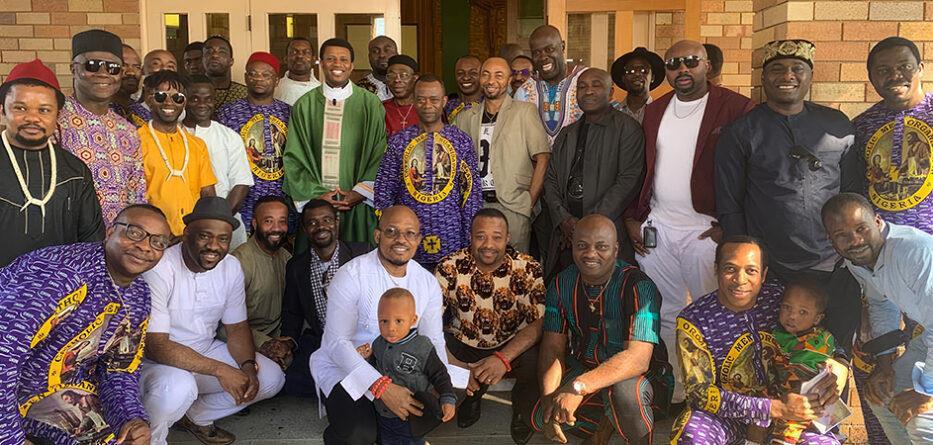
Easter Vigil opens the Easter celebration for us, and for most Catholics. It begins with
the service of light, the Exsultet, the numerous readings from old and new
testaments, the great Alleluia, the Gloria with the ringing of the church bells again,
the liturgy of the Eucharist, and the exclamations and exchanges of Paschal greetings,
and gifts. All these are ways the Church announces that the tomb of Jesus is now
empty, and that a new chapter has begun in the life of the Church.
Nigerian Catholic communities at home and abroad rejoice at the celebration of Easter
because they believe that Christ’s victory over sin, death, and the powers of darkness,
has given us new life and destroyed our old self.
Days before Easter, we go to the local markets to purchase food for the celebration.
We buy new clothes for our children to be worn on Easter Day. Adults are also
adorned in their best outfits for the Easter celebration.
The celebration on Easter Day traditionally begins with attending Mass. You’ll normally
see families together going to church and sitting together in church, after which
pleasantries and Easter wishes are exchanged.
During this period, we would normally visit extended families to celebrate the Risen
Lord with them. In celebrating Easter with family and friends, we also would engage in
multiple activities including a display of masquerades and feasting.
Easter season is also a wonderful opportunity for our people to gather and raise funds
for certain community projects. It is also a good time for family meetings to solve
problems, and to commemorate recent funerals.
Why these traditions are special
These traditions remind us that we are one people of the community and it’s a time that brings everyone home to commune as a people.
These traditions remind us that we are one people of the community and it’s a time that brings everyone home to commune as a people.
Families come together to profess their faith in the one God, and Risen Lord Jesus
Christ. Families also through their celebrations acknowledge the redemption/salvation
of humankind. Family reunions also give the opportunity to reconnect spiritually and
socially. Such reunions strengthen family bonds, and it is often a way to mend broken
relationships and restore peace.
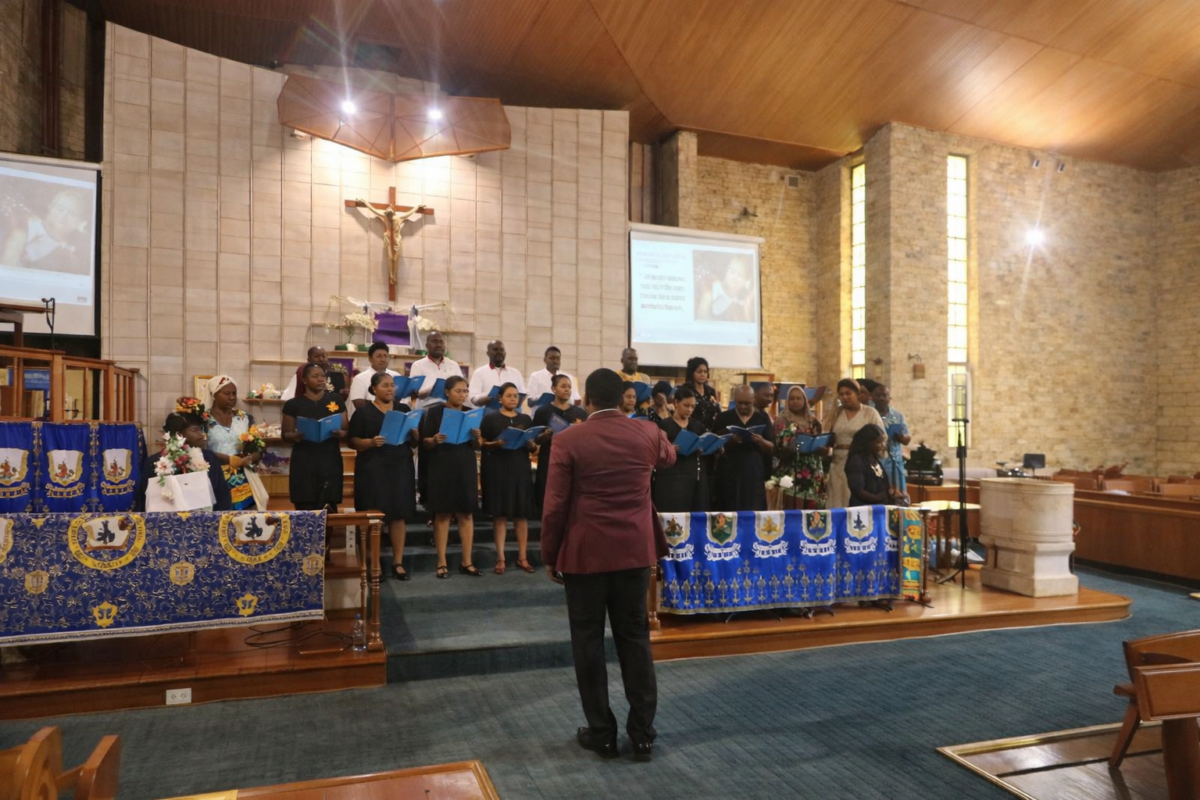
Members of the Nigerian Catholic Community sing during Mass.
Our Easter delicacies
Some of our special Easter food includes rice and stew, with assorted meats including
beef, chicken, turkey and fish. There is also pounded yam or cassava, with melon
soup, vegetable soup, and okra soup; pepper soup with goat meat or chicken meat;
jollof rice with assorted meat; and plantain porridge with dry fish.
The most important part of Easter
Good Friday, an essential part of Easter, is a day of sober reflection and thanksgiving
for the community as we join the global Catholic family in commemorating the
passion, crucifixion, and death of our Lord Jesus Christ. We appreciate that on this
sorrowful yet joyful day, we are reconciled to the love of God the Almighty Father.
The Exsultet is another important part of Easter when the light in the Church is
extinguished and the Easter proclamation, which announces the victory of the Risen
Lord, is sung. The people hold their lit candles, singing and dancing, especially when
the traditional Igbo-Abu-Oma-Exsultet is used.
How we say: Happy Easter!
We would normally hug each other and recount “ha-a-appy-y-y
Easte-e-er”. In our ‘WaZoBia’ languages of Nigeria we may say:
“Baraka da Easter” in Hausa, or “Eku odun Ajinde” in Yoruba,
and “Anuri Mbilite na-onwu Christi” in Igbo.
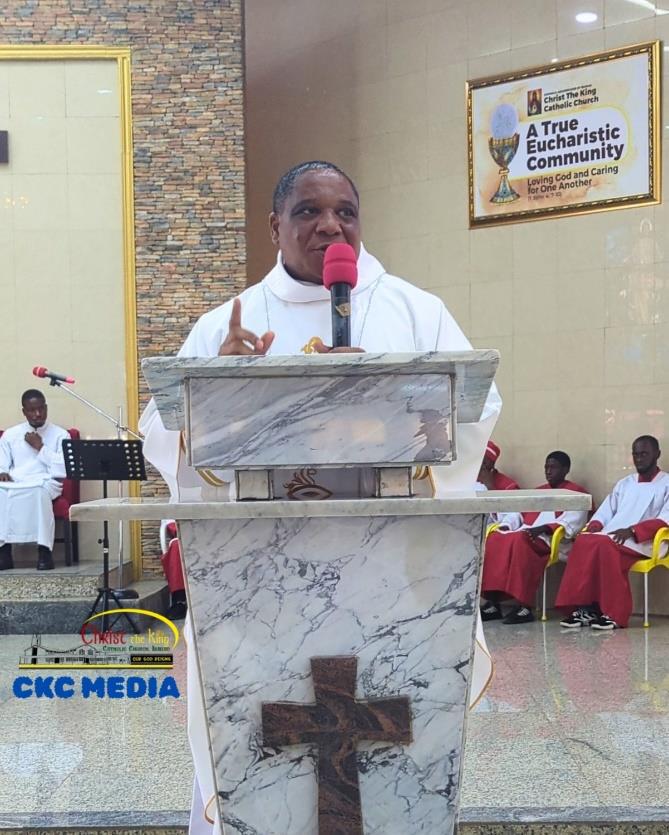
Preaching the word of God at Mass, on Easter in Nigeria…He Is Risen
The International Catholic Family Newsletter Is Published Monthly
Our mission statement is to motivate people to pray and to be
Christian examples in their work, home and with others, for
those needing the Light in a world of Darkness.
The Rosary is the ‘weapon’ for these times. – St. Padre Pio